
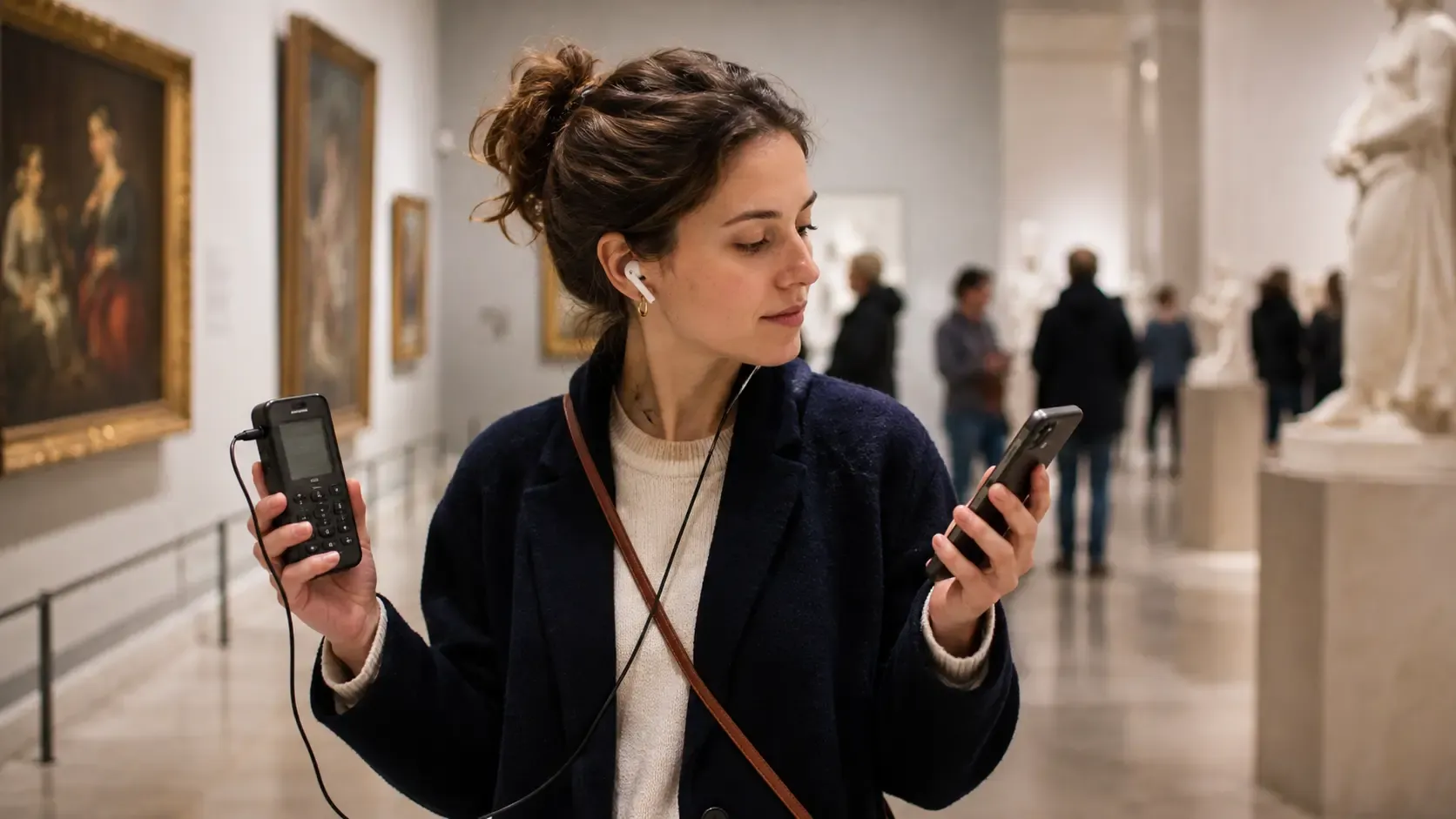
Over the years, many museums have adopted conventional audio guides. These systems allowed visitors to listen to explanations about artworks, rooms and collections, adding context to the visit. However, as technology has evolved, digital systems have become increasingly common.
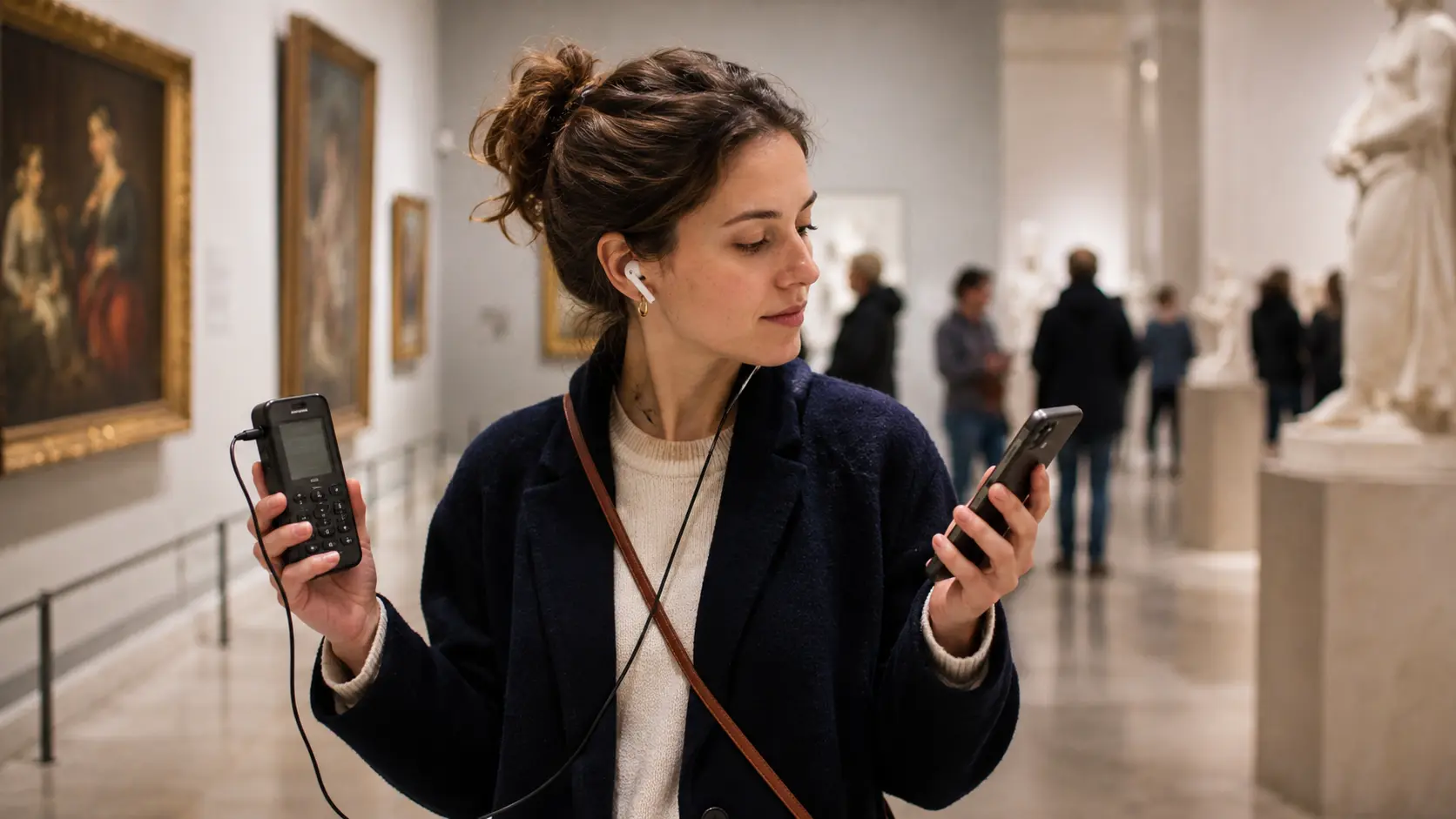
But what really distinguishes a conventional audio guide from a digital guide?
The conventional audio guide
A conventional audio guide usually depends on physical equipment provided by the museum. Visitors collect the device at the entrance, use it during the visit and return it at the end. In many cases, the content is accessed through numbers associated with each room, artwork or point of interest.
This model has advantages. It is familiar, it does not require visitors to use their own devices and it has been used successfully by many institutions for years. However, it also creates operational challenges.
Physical devices need to be purchased, stored, charged, cleaned, repaired and replaced. They can be lost or damaged. They also create queues at the beginning and end of the visit and may require staff support.
The digital audio guide
A digital audio guide works through visitors’ own devices, usually smartphones. It can be accessed through a mobile app or, more conveniently, through a browser-based experience such as a Progressive Web App.
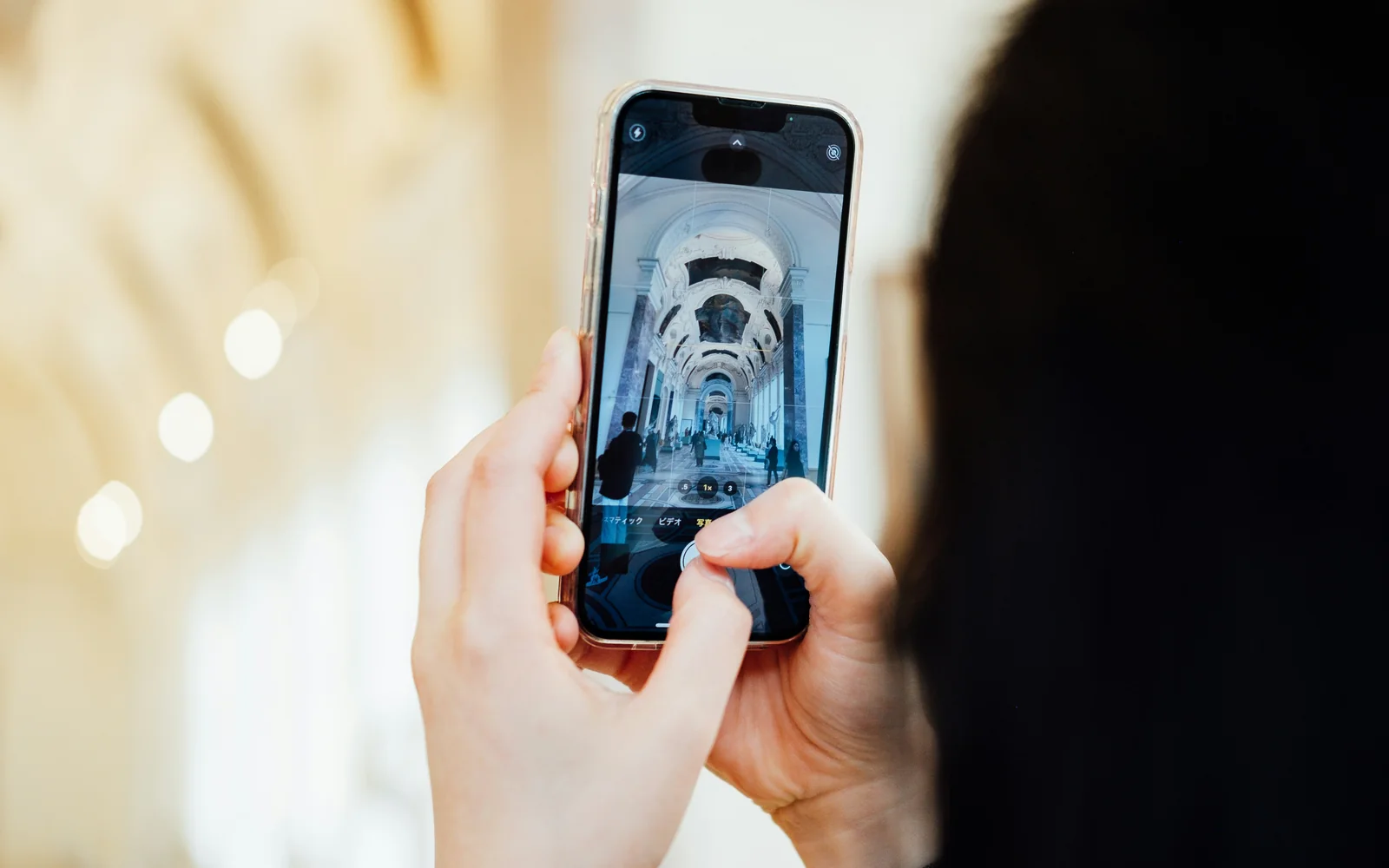
This model reduces the need for physical equipment and makes the experience more flexible. Visitors can access content in their own language, use headphones they already have and start the experience without waiting for a device.
Digital guides can also include much more than audio. They may offer images, video, maps, accessibility profiles, sign language, subtitles, gamification, surveys and analytics.
Updating content
One of the biggest limitations of conventional systems is the difficulty of updating content. Museums frequently change exhibitions, routes and interpretation needs. Updating a physical audio-guide system can be slow and expensive.
Digital systems are easier to update. Content can be edited in a backoffice or content management system, allowing institutions to adapt information as exhibitions change or new needs arise.
Accessibility and visitor experience
Digital guides can also support a more accessible experience. They can include audio description, simplified language, subtitles, sign language, larger text and multilingual content. This makes them more adaptable to different audiences.
For visitors, the experience can also be more personal. They can choose what to listen to, pause, repeat, follow a route or explore additional content according to their interests.
A change in paradigm
The shift from conventional to digital audio guides is therefore easy to understand. Digital systems can offer the core function of a traditional audio guide while adding flexibility, accessibility, interactivity and operational efficiency.
This does not mean that conventional audio guides have no value. In some contexts, they may still be useful. But for many museums and cultural spaces, digital guides offer a more sustainable and adaptable way to improve the visitor experience.