

For several years, QR codes became one of the most common ways to connect physical cultural spaces with digital content. They are simple, inexpensive and familiar. A visitor scans a code and accesses additional information about an artwork, object or place.

However, the way people interact with technology is evolving. Cultural spaces can now move beyond static markers and explore more natural forms of interaction, including artificial intelligence and visual recognition.
What is visual recognition?
Visual recognition uses artificial intelligence to identify objects, artworks, buildings or places through the camera of a smartphone. Instead of scanning a QR code, the visitor points the camera at what they are seeing and receives relevant content.
This makes the interaction more intuitive. The object itself becomes the access point to interpretation. Visitors do not need to search for a code or understand a numbering system. They interact directly with the space.
Advantages over QR codes
QR codes can be useful, but they also have limitations. They need to be physically placed in the space, may affect the visual environment and can create a fragmented experience when visitors constantly move between labels, codes and screens.
Visual recognition reduces the need for visible physical markers. This can be especially valuable in museums, monuments and heritage spaces where visual integrity matters.
It can also make the experience feel more fluid. Visitors use the camera to identify what interests them and access content immediately.
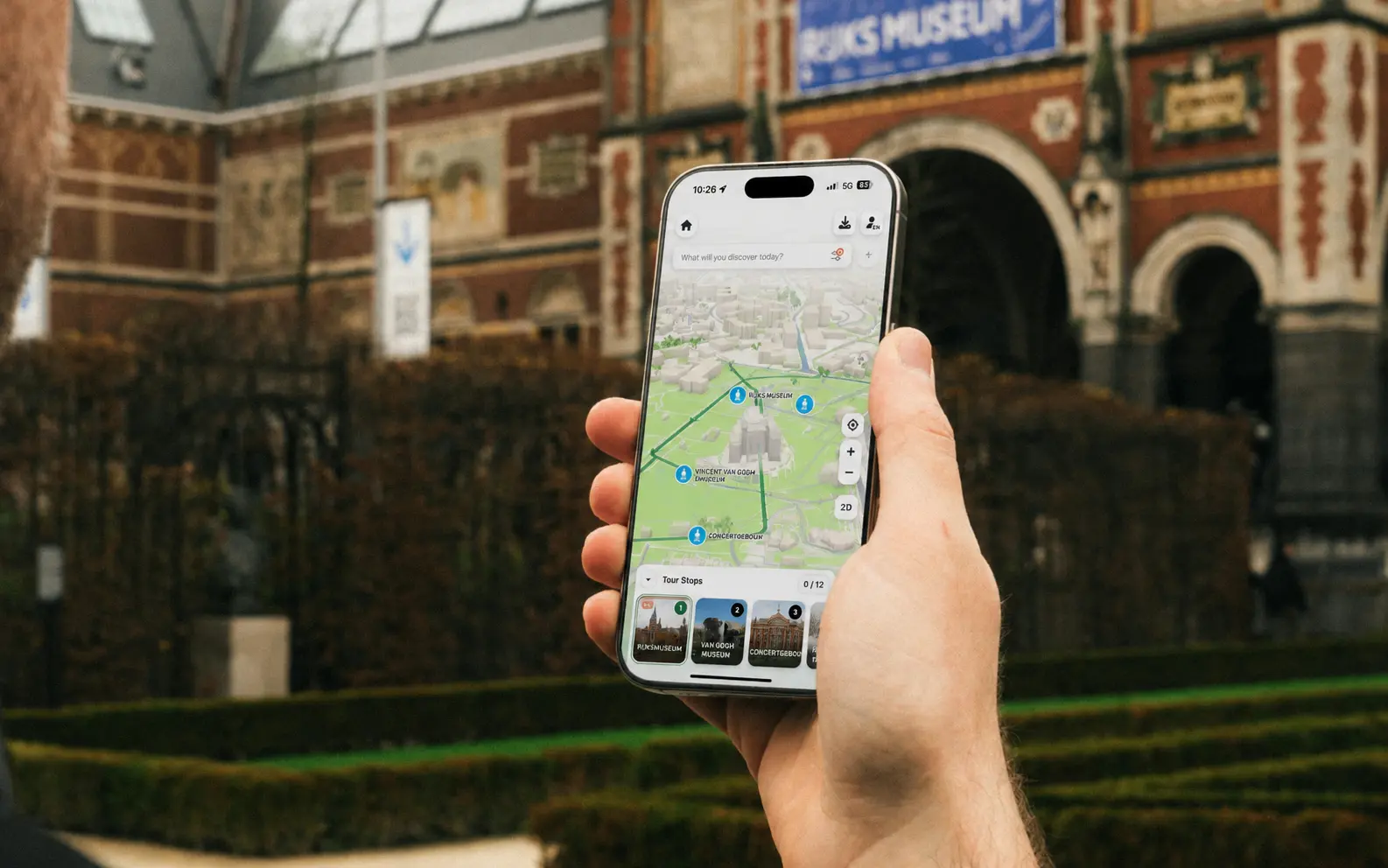
A more natural interaction
Artificial intelligence can help cultural interpretation become more responsive. In addition to identifying objects, digital systems can provide different layers of content, suggest routes, adapt information to visitor interests and support accessibility needs.
This does not mean replacing curators, educators or cultural teams. AI should be used as a tool that supports human interpretation and makes content easier to access.
The future of the visitor experience
The evolution from QR codes to AI reflects a broader transformation in cultural spaces. Visitors increasingly expect experiences that are simple, immediate and personalized. They want to understand what they are seeing without unnecessary friction.
For museums and heritage sites, this creates an opportunity to offer richer interpretation while reducing the physical infrastructure needed in the space.
The future of interaction in cultural spaces will not depend on technology alone. It will depend on how well technology is integrated with storytelling, accessibility and the real needs of visitors. When used carefully, AI and visual recognition can make cultural discovery more natural, more inclusive and more engaging.